For decades, researchers have worked to untangle the biological causes of neurodegenerative conditions such as Alzheimer’s disease. A primary focus has been the accumulation of misfolded proteins that clump together in the brain and damage neurons. A new study reveals that specific repetitive chains of amino acids, known as polyserine domains, can damage brain cells and worsen the accumulation of toxic protein clumps associated with these diseases.
The findings suggest that these repetitive chains may be a driver of neurological decline. The research was published in the Proceedings of the National Academy of Sciences.
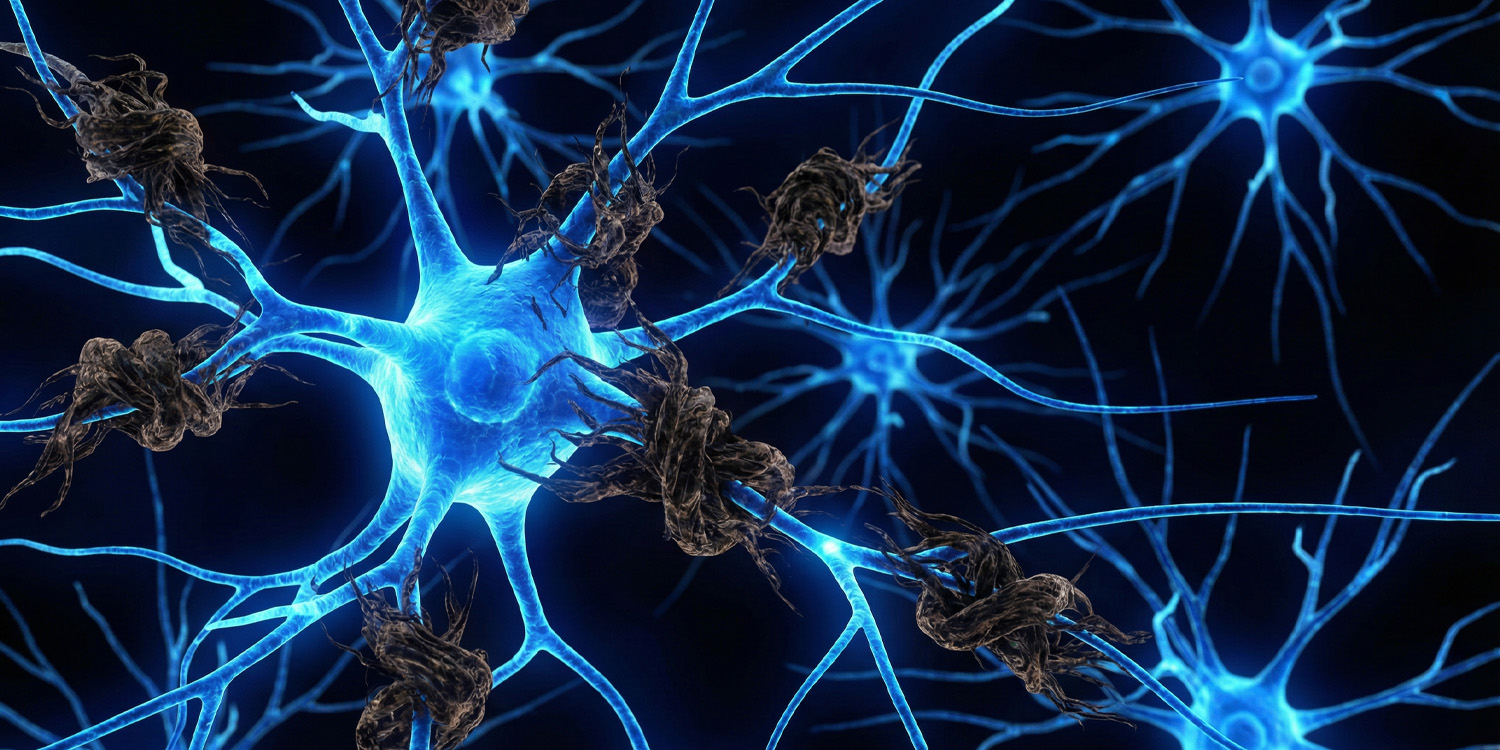
To understand this study, it is necessary to understand a protein called tau. In healthy brains, tau serves as a stabilizer for the internal skeleton of nerve cells. It helps maintain the tracks used to transport nutrients and molecules within the cell. In diseases collectively known as tauopathies, which include Alzheimer’s, tau molecules detach from this structure. They then chemically change and stick together. These sticky clumps, or aggregates, form tangles that choke the cell and eventually kill it.
Researchers are working to identify what causes tau to transition from a helpful stabilizer to a toxic clump. Previous investigations have observed that certain other proteins often appear alongside tau tangles in the brains of patients. These accompanying proteins often contain long, repetitive strings of the amino acid serine. Scientists call these strings polyserine domains.
Additionally, these polyserine chains are produced in specific genetic disorders. Diseases such as Huntington’s disease and spinocerebellar ataxia type 8 are caused by errors in the genetic code where a small segment of DNA repeats itself too many times. These genetic stutters can result in the production of toxic repetitive proteins, including those rich in serine.
Meaghan Van Alstyne, a researcher at the University of Colorado Boulder, led the study to determine if these polyserine domains are merely bystanders or active participants in brain disease. She worked with senior author Roy Parker, a distinguished professor of biochemistry at the same university. The team sought to answer whether the presence of polyserine alone is enough to harm a mammalian brain. They also wanted to know if it accelerates the problems caused by tau.
To investigate this, the team used a common laboratory tool known as an adeno-associated virus serotype 9. This virus is modified so that it cannot cause disease. Instead, it acts as a delivery vehicle to transport specific genetic instructions into cells. The researchers injected newborn mice with this viral carrier. The virus delivered instructions to brain cells to produce a protein containing a long tail of 42 serine molecules.
The researchers first observed the effects of this polyserine on normal, wild-type mice. As the mice aged, those producing the polyserine developed clear physical and behavioral problems. They weighed less than the control group. They also displayed difficulties with movement and coordination.
The team tested the motor skills of the mice using a rotarod assay. This test involves placing a mouse on a horizontal rotating rod that spins faster over time. The mice must keep walking to avoid falling off. It is similar to a lumberjack balancing on a rolling log. From four to six months of age, the mice expressing polyserine fell off the rod much sooner than the control mice.
Behavioral changes also emerged. The researchers placed the mice in a maze that is elevated above the ground. The maze has two enclosed arms and two open arms. Mice naturally prefer enclosed spaces because they feel safer. The mice with polyserine spent more time in the open arms. This behavior suggests a reduction in anxiety or a lack of natural caution.
The team also tested memory using a fear conditioning assay. In this test, mice learn to associate a specific sound or environment with a mild foot shock. When placed back in that environment later, a mouse with normal memory will freeze in anticipation. The polyserine mice froze much less often. This indicates they had severe deficits in learning and memory.
To find the biological cause of these behaviors, Van Alstyne and her colleagues examined the brains of the mice. they found a dramatic loss of a specific type of neuron called a Purkinje cell. These are large, distinctively shaped neurons located in the cerebellum. The cerebellum is the part of the brain responsible for coordinating voluntary movements.
The viral delivery system used in the study is known to be particularly effective at targeting Purkinje cells. In the mice receiving the polyserine gene, these cells were largely wiped out. The loss of these cells likely explains the coordination problems observed in the rotarod test.
Alongside the cell death, the researchers observed signs of gliosis. This is a reaction where support cells in the brain, known as glia, become overactive. It is a sign of inflammation and damage. The brain was reacting to the polyserine as a toxic presence.
The researchers then investigated where the polyserine went inside the surviving neurons. They found that the protein did not stay in the main body of the cell. Instead, it accumulated inside the nucleus. The nucleus is the control center of the cell that holds its DNA. The polyserine formed large clumps within the nucleus. These clumps were tagged with ubiquitin, a small molecule the cell uses to mark garbage for disposal. This suggests the cells were trying, and failing, to clear the toxic protein.
After establishing that polyserine is toxic on its own, the researchers tested its effect on tau. They used a specific strain of mice genetically engineered to produce a mutant form of human tau. These mice naturally develop tau tangles and neurodegeneration as they age.
The team injected these tau-prone mice with the polyserine-producing virus. The results showed that polyserine acts like fuel for the fire. The mice expressing both the mutant tau and the polyserine died significantly younger than those expressing only the mutant tau.
When the researchers analyzed the brain tissue of these mice, they found elevated levels of disease markers. There was an increase in phosphorylated tau. Phosphorylation is a chemical change that promotes aggregation. The study also found more insoluble tau, which refers to the hard, tangles that cannot be dissolved.
Furthermore, the team measured the “seeding” capacity of the tau. In disease states, misfolded tau can act like a template. It corrupts normal tau and causes it to misfold, spreading the pathology from cell to cell. Brain extracts from the mice with polyserine showed a higher ability to induce clumping in test cells. This indicates that polyserine makes the tau pathology more aggressive and transmissible.
Finally, the researchers asked if this effect was unique to serine. They compared it to other repetitive amino acid chains often found in genetic diseases, such as polyglutamine and polyalanine. They introduced these different chains into human neurons grown in a dish.
The results showed a high level of specificity. Only the polyserine chains recruited tau molecules into their clusters. The polyglutamine and polyalanine chains did not. This physical interaction between polyserine and tau appears to be the mechanism that accelerates the formation of toxic tau seeds.
There are caveats to consider in this research. The study used a virus to force the cells to make high levels of polyserine. This might result in higher concentrations of the protein than would naturally occur in a human disease. Future research will need to determine if lower, natural levels of polyserine cause the same degree of harm over a human lifespan.
The authors also noted that while they saw massive cell death in the cerebellum, other brain areas like the hippocampus seemed more resistant to cell loss, despite containing the protein. Understanding why some neurons die while others survive could offer clues for protection.
This study provides evidence that polyserine is not just a passive marker of disease. It suggests that these repetitive domains are active toxins that can kill neurons and worsen tauopathies. This opens a potential new avenue for therapy. If scientists can block the interaction between polyserine and tau, they might be able to slow the progression of diseases like Alzheimer’s.
“If we really want to treat Alzheimer’s and many of these other diseases, we have to block tau as early as possible,” said Parker. “These studies are an important step forward in understanding why tau aggregates in cells and how we can intervene.”
The study, “Polyserine domains are toxic and exacerbate tau pathology in mice,” was authored by Meaghan Van Alstyne, Vanessa L. Nguyen, Charles A. Hoeffer, and Roy Parker.