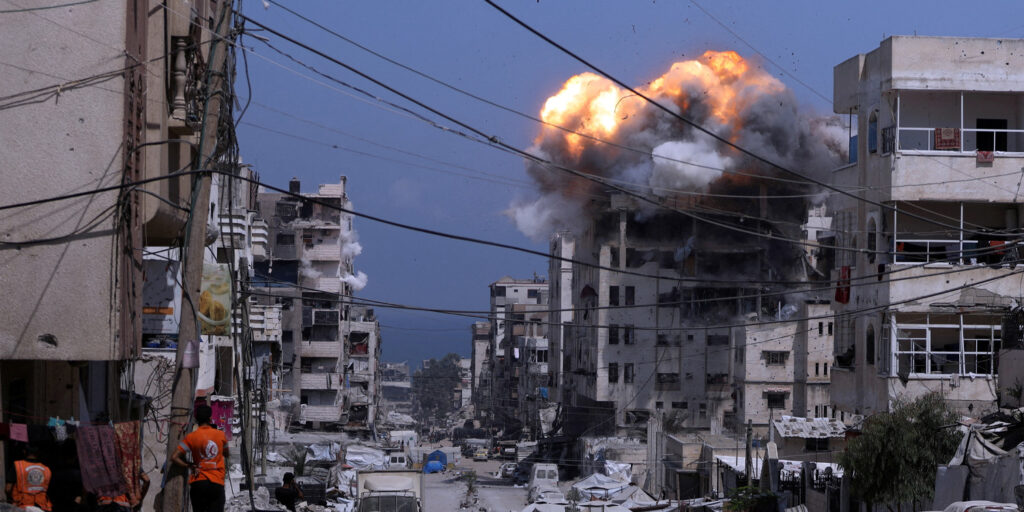
Continuous warfare in the Gaza Strip has left a vast majority of its adult population experiencing severe mental health conditions, including overwhelming anxiety, depression, and trauma. The research detailing these psychological impacts was recently published in the journal Conflict and Health.
War takes a massive physical toll on communities through direct violence and the destruction of infrastructure. It also creates deep, invisible psychological wounds that can last for generations. Mental health conditions like depression and anxiety often surge in conflict zones as people endure constant fear, displacement, and the loss of loved ones.
Post-traumatic stress disorder is another common outcome of living through prolonged violence. This psychiatric condition occurs when individuals experience shocking or dangerous events and subsequently suffer from a range of debilitating symptoms. People with this disorder often experience intrusive memories, emotional numbness, and a heightened state of physical alert that makes it difficult to sleep or concentrate.
Before the current conflict escalated in October 2023, residents of the Gaza Strip already faced intense levels of psychological distress. Decades of economic hardship, restricted movement, and recurrent military operations had created a highly vulnerable population. Previous studies indicated that a large portion of the region’s adults and children were already struggling with depressive symptoms.
The current war has drastically worsened these living conditions and expanded the scope of human suffering. A massive portion of the population has been displaced from their homes into crowded, temporary shelters. Meanwhile, the widespread destruction of hospitals and basic infrastructure has severely limited access to medical and psychological care.
Understanding the true psychological burden of this ongoing crisis is a highly urgent task for public health experts. Medical researcher Mohamed R. Zughbur at al-Azhar University in Gaza led a team of international health professionals to measure the exact scale of this mental health emergency. Zughbur and his colleagues recognized that immediate data was necessary to guide both current humanitarian aid and future medical interventions.
The research team set out to measure the exact prevalence of mental health disorders in Gaza after a full year of the ongoing war. They also sought to identify which specific wartime experiences were most closely linked to extreme psychological distress.
To gather this information, the researchers conducted an online survey between November 2024 and January 2025. The ongoing violence and the destruction of roads made in-person interviews too dangerous and logistically impossible. The team distributed the survey through email and various social media networks to reach as many people as possible.
They successfully collected responses from 405 Palestinian adults currently living in the Gaza Strip. The participants were asked a series of demographic questions regarding their age, living situation, and level of education.
The questionnaire also asked participants about their direct exposure to specific war-related events over the past year. It asked whether they had lost a family member, witnessed severe injuries, experienced forced displacement, or lost their jobs due to the conflict.
To measure psychological distress, the researchers utilized three standardized psychological questionnaires. These screening tools asked individuals to rate how often they experienced specific feelings, such as unwanted memories of stressful experiences or a lack of interest in daily activities.
The gathered data revealed exceptionally high rates of mental health disorders among the participants. Nearly 73 percent of the respondents reported experiencing moderate to severe depression. These individuals frequently reported feelings of hopelessness, severe fatigue, and an inability to find pleasure in life.
Anxiety was also highly prevalent across the surveyed population. Exactly 65 percent of the participants reported experiencing moderate to severe anxiety symptoms. These symptoms include constant worry, restlessness, and an inability to focus on basic tasks.
The rates of trauma were even higher than the rates of depression and anxiety. The data showed that 83.5 percent of the surveyed adults met the diagnostic threshold for probable post-traumatic stress disorder. The average score on the trauma questionnaire was exceptionally high, indicating a massive psychological burden among the respondents.
Many individuals were suffering from overlapping mental health conditions at the exact same time. The researchers found that 54 percent of the participants experienced severe depression, severe anxiety, and probable post-traumatic stress disorder simultaneously. This overlap suggests that chronic trauma leads to a widespread collapse of emotional regulation, rather than just a single isolated disorder.
The team then used statistical models to see how specific wartime experiences affected a person’s mental health. They looked at the mathematical odds of a person developing a mental disorder after living through a specific traumatic event. When checking the mathematical fit of these models, the researchers found that the deviations were not statistically significant, meaning their predictive equations were highly reliable.
Losing a family member was strongly linked to worse mental health outcomes. Participants who had lost a relative were almost twice as likely to experience moderate or higher levels of depression and anxiety. This finding aligns with previous studies showing that grief and bereavement are major drivers of psychological distress during a war.
Witnessing violence also had a massive impact on an individual’s psychological well-being. People who saw someone being killed or injured were three times more likely to report moderate to severe anxiety.
Geographic location played a clear role in the respondents’ mental health as well. Living in the northern part of the Gaza Strip, an area that has seen intense military operations, was strongly associated with higher levels of both depression and anxiety.
The researchers also noticed distinct patterns related to the age of the participants. As the age of the respondents increased, their likelihood of experiencing severe depression and trauma symptoms actually decreased.
Older adults may possess more adaptive coping mechanisms or have developed psychological resilience after living through previous periods of conflict. The cultural context of Gaza, which features strong family support systems, might also help insulate older adults from certain types of chronic stress.
However, older individuals reported much higher levels of anxiety than younger participants. The researchers suspect this heightened anxiety stems from age-specific physical vulnerabilities and a reliance on failing healthcare infrastructure. Older adults often face declining physical health and may feel entirely helpless when medical care and essential resources are completely cut off.
While this study provides a clear picture of widespread suffering, the researchers noted a few limitations to their work. Because the survey was conducted entirely online, it required participants to have internet access and a functional digital device. This method likely excluded the most impoverished residents and older individuals who lack reliable technology.
The sample of participants ended up being highly educated compared to the general population. In fact, more than 90 percent of the survey respondents held a bachelor’s degree or a higher level of education.
People with lower socioeconomic status usually face even worse psychological impacts during a prolonged war. As a result, the true rates of depression and anxiety in the broader population might be even higher than this study captured.
The researchers also relied on self-reported symptoms rather than formal psychiatric evaluations conducted by a medical doctor. While the questionnaires used are highly reliable in research settings, self-reporting can sometimes be influenced by a person’s immediate level of distress.
Additionally, the study only surveyed adult residents of the region. Children are exceptionally vulnerable to the trauma of war, and their specific psychological needs remain largely unmeasured in this particular research.
Future studies will need to address these gaps by including children and reaching populations without internet access. The researchers suggest that future projects should also focus on developing psychological interventions designed specifically for the cultural context of Gaza.
Healing from this level of widespread trauma will require more than just standard medical treatments. It will demand comprehensive, community-led programs that rebuild social bonds and provide long-term emotional support.
Until then, the current data demonstrates an overwhelming need for international support and an immediate end to the violence. Mental health care must become a central part of the humanitarian response to this ongoing crisis.
The study, “Prevalence and correlates of anxiety, depression, and symptoms of trauma among Palestinian adults in Gaza after a year of war: a cross-sectional study,” was authored by Mohamed R. Zughbur, Yaser Hamam, Ashraf Kagee, Majd Hamam, Yara M. Hijazi, Mohammed Hamam, Ola Abuolwan, Shameq Sayeed and Guido Veronese.